Euro-PCTs and EPO fee increase

The European Patent Office (EPO) will increase a wide range of official fees with effect from 1 April 2026. As with previous fee adjustments, many applicants are planning to secure the lower rates by ensuring that all relevant fees are paid on or before 31 March 2026. For standard (EP direct) European patent applications, this approach is usually straightforward: if the fee is validly paid before the increase takes effect, the lower amount generally applies. However, applicants entering the European phase of a PCT application should exercise caution.

When the 31‑month deadline for European phase entry falls on or after 1 April 2026, simply paying the fees before that date may not be sufficient because the EPO does not start processing a Euro-PCT application before the 31-month time limit (Rule 159(1) EPC) has expired.

To ensure that the lower pre‑increase fees remain applicable, applicants should consider submitting a request for early processing under Article 23(2) or 40(2) PCT. Only when such a request is filed on or before 31 March 2026 will the EPO process the entry early, allowing the lower fees to apply. Applicants with PCT applications approaching the end of the international phase should therefore review their timelines carefully and, where appropriate, file a request for early processing to avoid unintended exposure to higher fees.
Color drawings and WIPO DAS

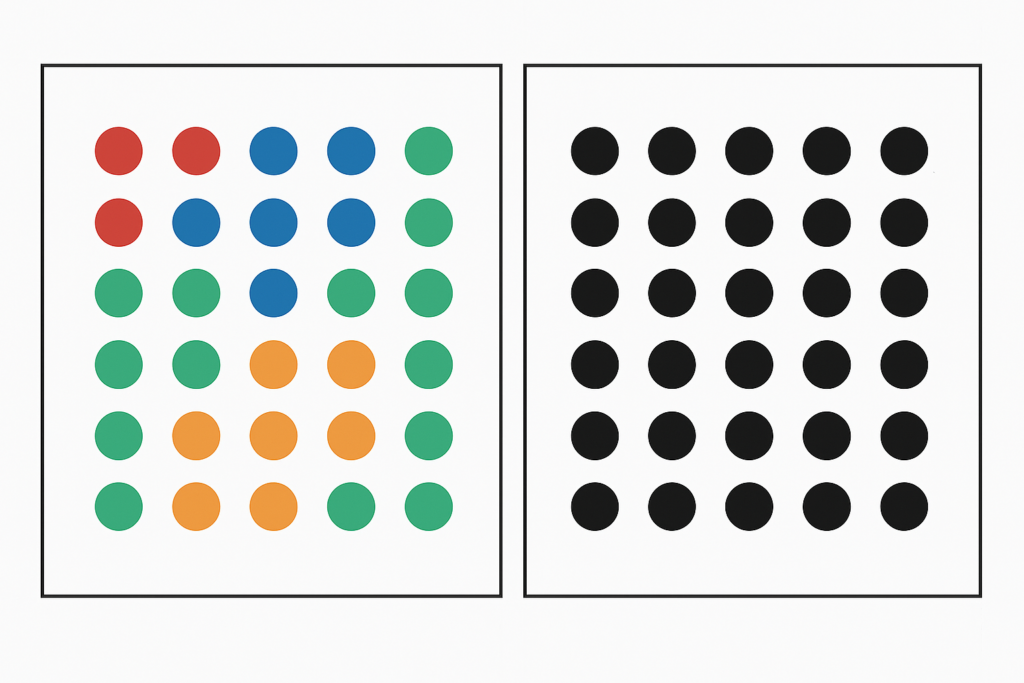
As of 1 October 2025, the EPO permits the electronic filing and processing of drawings in color and grayscale. This change, set out in the Decision of the President (OJ EPO 2025, A49) and the accompanying Notice (OJ EPO 2025, A57), represents a departure from the long‑standing requirement that drawings be submitted exclusively in black and white line form. The new framework provides applicants with greater flexibility in the preparation of visual disclosures, particularly in areas where colour conveys technical information that cannot readily be expressed through conventional monochrome illustrations.

The EPO processes the color drawings throughout the Office’s internal workflows. This includes their extraction and preparation for deposit with the WIPO Digital Access Service. Practitioners should be aware, however, that downstream Offices may apply their own technical constraints when retrieving documents via WIPO DAS. Where an accessing Office does not yet support the processing of colour drawings, it may convert such documents to black and white as part of its intake procedure.

Applicants relying on color to convey essential technical content are therefore advised to consider whether jurisdictions of interest can accommodate such material without loss of information.

Search and Examination Matters 2026

The European Patent Office will host “Search and Examination Matters 2026” online from 2 to 5 February 2026. This free event, organized with epi, offers four afternoon sessions featuring 16 presentations on key topics in patent practice. A major focus will be on artificial intelligence and its impact on search and examination, including challenges in sufficiency of disclosure. Other sessions will address inventive step in graphical user interfaces and practical issues faced by professionals. The event encourages interactive discussion with EPO examiners and experts, providing a platform to exchange insights and ask questions. Sessions will not be recorded, so live participation is essential. Registration is open now, and attendance is free.

Upcoming Changes to DPMAdirektPro

Starting March 1, 2026, the revised version of the Regulation on Electronic Legal Communication at the German Patent and Trademark Office (ERVDPMAV) is expected to take effect. This revision will significantly impact how electronic documents are delivered via the DPMAdirektPro Electronic Mailbox. To ensure a smooth transition, users must take action now if they wish to continue using electronic document receipt under the new rules.

Under the new version of § 5 ERVDPMAV, electronic documents will be considered delivered on the fourth day after being made available for retrieval, provided the user has consented to digital delivery and understands its legal implications. The DPMA is in the process of updating the DPMAdirektPro terms of use accordingly. Users must grant consent for document delivery and provide an email address for notifications. Without these steps, access to electronic document delivery will not be possible after the regulation takes effect.

EPO Discontinues PACE for Search

The European Patent Office (EPO) has announced a major change to its PACE programme in Official Journal 2025, A69. Starting 1 February 2026, the PACE programme will no longer apply to the search phase. This decision reflects the EPO’s success in consistently delivering search reports within its six-month target.

PACE will remain available only for the examination phase, allowing applicants to speed up the issuance of the first examination report and communications under Rule 71(3) EPC. A revised Form 1005 will be introduced in 2026 for examination acceleration requests. Other acceleration options, such as the Patent Prosecution Highway (PPH), remain unaffected.

Quantum Innovation

The upcoming EPO-OECD event Scaling up Quantum Innovation will provide insights on how quantum technologies are moving from theory to transformative applications. Quantum encryption and quantum computing (nascent fields during my PhD days) are now contributing to the next technological revolution. These breakthroughs promise to redefine security, accelerate computing, and power digital transformation across industries. The event will explore patenting trends, investment challenges, and strategies to bridge the gap between research and commercialization. It is inspiring to see how early-stage concepts have evolved into drivers of tomorrow’s economy.

Spooky Season Meets IP

Just in time for Halloween, the German Patent and Trademark Office (DPMA) has launched an informative website that explores the intersection of Halloween and intellectual property. From eerie inventions to ghoulish designs, the site showcases real patents and trademarks that bring the spooky season to life—demonstrating that even ghostly gadgets and pumpkin-shaped candy carriers are protected by IP rights.

This initiative is more than seasonal fun. It illustrates how deeply intellectual property is woven into our daily lives, even in contexts we might not expect. Whether it’s costumes, decorations, or themed products, IP rights ensure that creativity and innovation are rewarded and protected. The DPMA’s Halloween page reminds us that behind many clever ideas there exists a legal framework that supports inventors, designers, and entrepreneurs.

In a world where seasonal trends quickly become commercial phenomena, the importance of IP is clearer than ever.

G 2/24 – intervener in appeal proceedings

As reported by the EPO in a Press Communiqué of 25 September 2025, the Enlarged Board of Appeal has rendered decision G 2/24 (“Skin cleanser”) that relates to the procedural status of an intervener in opposition appeal proceedings.

The Enlarged Board confirmed its previous decision G 3/04 and concluded that, after withdrawal of all appeals, appeal proceedings may not be continued with a third party who intervened only during the appeal proceedings (see the EPO’s Press Communiqué of 25 September 2025).

EPO User Day 2025

The EPO User Day 2025 is scheduled for September 23-24, 2025. This year, the EPO will offer dedicated sessions for SMEs and micro-entities, focusing on how patents can support growth and innovation. The event also offers breakout sessions for patent professionals.

Referreal on adaptation of description

As reported by the European Patent Office (EPO), questions relating to the adaptation of the description were referred to the Enlarged Board of Appeal (G 1/25).

It is the EPO’s practice that the description must be aligned with amended claims. I.e., when claims are amended, the description should be adapted accordingly to reflect these changes, avoid contradictions, and maintain a coherent disclosure.

At least one Board of Appeal has previously voiced doubts as to whether there is a legal basis for this practice, as previously reported in this blog section.

Considering recent case law from the Enlarged Board (G 1/24, point 20), it would be surprising if the Enlarged Board took the position that the EPO’s practice on adaptation of the description had no legal basis. The adaptation of the description also appears to be dear to many in EPO management, who seem to regard consistency of description and claims to be a KPI for the ongoing patent quality discussion.